

If you have recently checked your website analytics and noticed traffic from AI sources, such as ChatGPT, Perplexity, Claude, or other AI-powered platforms, you are not imagining things.
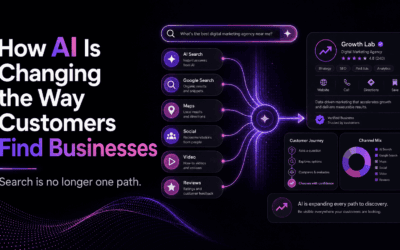
AI tools are changing how people search, research, compare, and make decisions online. Instead of only typing questions into Google or Bing, people are now asking AI tools for recommendations, explanations, local businesses, service providers, product comparisons, job listings, and resources.
And when those tools link to your website, that traffic may show up in your analytics as referral traffic from an AI platform.
So what does it mean, and why is AI suddenly sending people to your site? Let’s break it down.
AI Is Becoming a Search and Discovery Tool
For years, search has been dominated by Google, with Bing and other platforms playing a smaller role. But now, AI tools are becoming part of the research process.
Someone might ask an AI platform:
“What are the best marketing agencies for healthcare companies?”
“How do I improve my website SEO?”
“What does GEO mean in digital marketing?”
“Where can I find examples of retargeting strategies?”
If the AI tool references or links to a website as part of its answer, and the user clicks through, that visit can appear as referral traffic from the AI platform.
What this means for your website:
AI is becoming another way people discover businesses and content. If your site has helpful, clear, well-structured pages, it may have a better chance of being referenced, recommended, or clicked on through AI-assisted search.
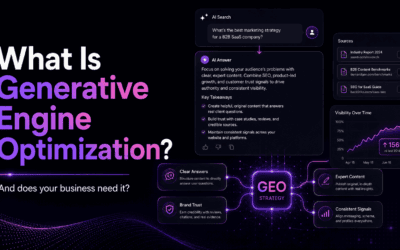
That means SEO is still important, but it is no longer the only search conversation in the room. GEO, or generative engine optimization, is becoming part of the bigger visibility picture.
AI Looks for Clear, Helpful, Well-Structured Content
AI tools are not just looking for random keywords sprinkled across a page like digital confetti.
They are trying to understand what your content is about, whether it is useful, and whether it clearly answers the question being asked. Pages that are organized, specific, and easy to interpret may have a stronger chance of being surfaced in AI-generated answers.
That includes things like:
Clear page titles
Helpful headings
Specific service descriptions
FAQ sections
Strong internal linking
Structured data
Authoritative, useful content
Consistent brand and business information
In plain English: your website needs to be easy for both people and machines to understand.
What this means for your website:
If your content is vague, thin, outdated, or hard to navigate, AI tools may have a harder time understanding when to reference it. But if your content clearly explains what you do, who you help, where you work, and why your information is useful, you are giving search engines and AI tools a better map to follow.
Tiny robot spiders love a good map. Unfortunately, so do humans.
AI Referrals Can Come From Research, Sharing, and Recommendations
AI referral traffic does not always mean someone asked, “What website should I visit?” and clicked a link directly.
Sometimes AI tools are part of a longer research process. A user may ask an AI platform to summarize options, compare services, explain a topic, or find helpful resources. If your website is included as a source or suggested next step, that can send traffic your way.
AI is also being used internally by teams. Someone may ask a tool to research vendors, summarize a topic, or collect links to useful resources, then click through to your site as part of that process.
What this means for your website:
Your content may be reaching people earlier in the decision-making process. These users may not always arrive through a traditional Google search, but they are still actively researching, comparing, or looking for answers.
That makes high-quality content even more valuable. A strong blog post, service page, FAQ, or resource page can become an entry point for someone who first found you through an AI-assisted search experience.
AI Is Also Changing Traditional Search
AI is not separate from search anymore. It is being built into search engines, browsers, productivity tools, and everyday research habits.
Google has AI-powered search features. Bing has AI-assisted results. Platforms like ChatGPT and Perplexity can provide summaries, citations, and source links. People are moving between traditional search engines and AI tools without really thinking about it.
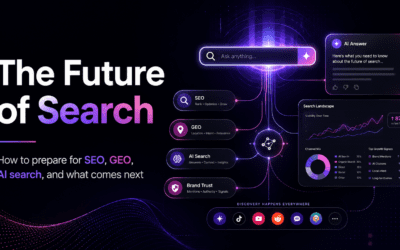
This means your website visibility strategy should not only focus on “ranking on Google.” That still matters, of course, but the bigger question is becoming:
Can your content be found, understood, trusted, and referenced across different search experiences?
What this means for your website:
Businesses should pay attention to both SEO and GEO. SEO helps your site perform in traditional search engines. GEO helps prepare your content for AI-powered search, answer engines, and tools that summarize or recommend information.
The goal is not to abandon SEO. The goal is to build on it.
How to Make Your Website More AI-Friendly
If AI sources are starting to appear in your analytics, or you want to prepare your website for where search is headed, here are a few smart places to start.
Create Better, More Useful Content
AI tools are more likely to understand and reference content that is specific, helpful, and clearly written. Your pages should answer real questions, explain your services, and provide enough context for someone to understand why your business is relevant.
Strengthen Your Service Pages
Your core service pages should clearly explain what you offer, who you help, and what makes your approach different. Thin service pages are not doing you any favors in SEO, GEO, or conversions.
Use Clear Headings and Page Structure
Good structure helps people skim your content and helps search engines and AI tools understand what each section is about. Your headings should actually explain the page, not just sound cute.
Cute is welcome. Confusing is not.
Add FAQs Where They Make Sense
FAQs are useful because they mirror how people actually search and ask questions. They can also help AI tools better understand the topics your page covers.
Use Structured Data
Schema markup can help search engines better interpret your content, especially for articles, FAQs, local businesses, services, products, reviews, and job postings.
Monitor AI Referral Traffic
Check your analytics regularly to see whether AI platforms are sending traffic to your site. Look at which pages are receiving that traffic, how users behave once they land, and whether those visits are supporting meaningful actions like forms, calls, bookings, or content engagement.
Why This Matters for Businesses
AI referral traffic is not just a fun little analytics surprise. It is a sign that user behavior is changing.
People are still searching, but they are not always searching the same way. They are asking longer questions. They are using AI tools to compare options. They are relying on summaries before clicking. They are discovering businesses through platforms that did not exist in the same way a few years ago.
For businesses, this means your website needs to do more than exist.
It needs to be clear.
It needs to be useful.
It needs to be structured.
It needs to support trust.
It needs to be ready for both humans and AI-powered discovery.
That is where SEO and GEO start working together.
Final Thoughts
If AI tools are showing up as referral sources in your analytics, that is not necessarily a weird glitch in the machine. It may be a sign that your website is being discovered through new search behaviors.
Traditional SEO is still important, but AI-powered search is becoming part of the digital marketing landscape. Businesses that pay attention now will be better prepared as search continues to evolve.
The best place to start is with strong content, clear structure, helpful service pages, and a website that actually explains what you do.
In other words, give both people and AI something useful to work with.
Need Help Making Your Website Easier to Find?
Ad Tech Social helps businesses improve their visibility through SEO, GEO, content strategy, and custom website support. If your analytics are starting to show AI referrals, or if you want your website to be better prepared for the future of search, let’s talk.

0 Comments